
 (630) 914-3505

Can I Get Dental Implants with Bone Loss?
If you are planning to use dental implants to replace missing teeth, then bone grafting might be necessary to provide a solid foundation so that your bone density is strong enough to support the implant post. Bone loss after tooth extraction is common, but it doesn’t necessarily mean that you are not a good candidate for dental implants. With the right bone grafting strategy, it’s possible to strengthen the jawbone so that it is strong enough to hold the titanium post for the implant.
Why Jawbone Density Matters for Implant Success
In order for a dental implant to be successful, osseointegration needs to occur: the implant must be able to fuse into the jawbone. For this to happen, the bone must be dense and wide enough to hold the post securely.
The problem is that bone loss happens quickly after tooth extraction. Within the first year after the tooth is removed, the jawbone in that area can start to shrink, making it harder for a dental implant to be placed in that location in the future. Timing matters when it comes to dental implants after extraction, and luckily, there are things that we can do to make dental implants possible…even after bone loss has occurred.
As a general rule of thumb, there needs to be at least 1mm of bone around the implant post. Our dental team uses a 3D cone beam CT scan (CBCT) to evaluate your bone density and determine if you are a good candidate for the treatment. We look at all factors that could impact the success of your treatment, including the severity, location, and causes of your bone loss.
Bone Grafting to Rebuild the Foundation for Dental Implants
Bone grafting is a procedure that can be used to rebuild the jawbone by placing either donor bone material or synthetic bone into the treatment area. For example, the dentist might harvest bone from somewhere else in the body or use bone from another donor.
There are different types of bone grafting treatments that can be used, depending on the timing and your unique needs:
- Socket Preservation Graft: A bone graft can be done at the time of extraction, known as a socket preservation graft, as a way to prevent bone loss from occurring.
- Ridge Augmentation: This treatment is used if you have already had significant shrinkage after tooth extraction. A ridge augmentation can rebuild the height and/or width of the jawbone.
- Sinus Lift: If you have bone loss in the upper jaw and it is near the sinus cavity, then it’s necessary to elevate the sinus floor so there is space for the grafting material.
Once the bone graft is in place, you usually need 3-6 months of healing so that the bone can get strong enough to hold the dental implants. After the graft, you will need to come back to our office for checkups so that we can monitor the progress and ensure that you are ready for the next stage of tooth restoration.
Implant Solutions When Bone Loss Is Significant
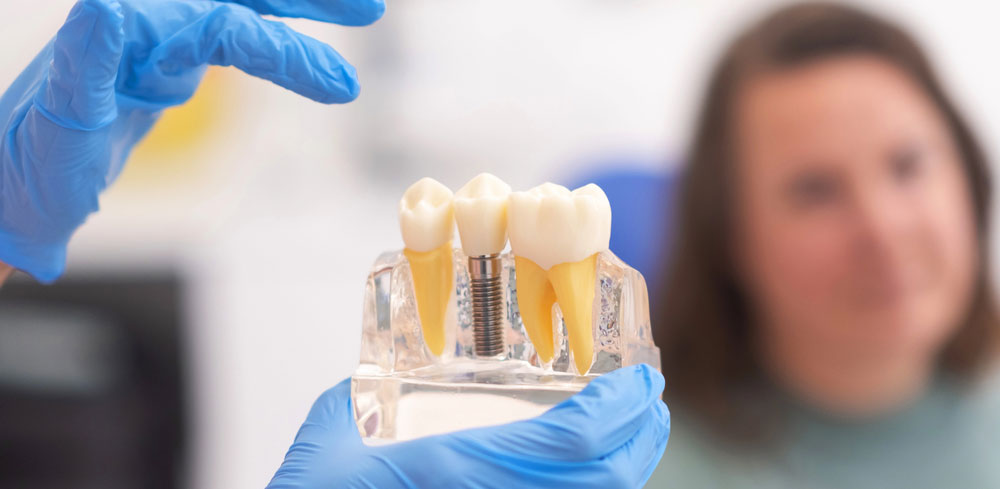
Even with significant bone loss, modern dentistry makes it possible to replace the missing teeth and restore your dental function. A combination of dental implants and bone grafts is one of the best treatment options that you might consider.
Not only do dental implants improve your aesthetics by restoring your smile, but they are also helpful for ensuring optimal function when you are eating and talking. A single tooth restoration can be done with one dental implant and a crown on top. Or, multiple teeth can be replaced with dental bridges anchored by one or more dental implants.
For full smile restoration, we can use full mouth dental implants (known as All-on-4 or All-on-6). Often, full dental implants can be placed strategically, which might even eliminate the need for grafting entirely.
Who Is a Candidate for Permanent Dental Implants with Bone Loss?
If you are missing teeth and considering dental implants, then it’s time to schedule a consultation with our dental team to see if you are a good candidate for this treatment. The strongest candidates are patients with mild to moderate bone loss, as well as non-smokers. Dental implants are most successful for candidates who are in good health overall.
Dental implants are a possibility for patients with health complications such as uncontrolled diabetes or a history of jaw radiation. But each situation is unique, so we will need to evaluate your jawbone and overall health history to determine if there are treatment options to mitigate the potential risks associated with these other health issues.
Keep in mind that you might not be a good candidate for permanent dental implants if you have an active infection or untreated gum disease. Additionally, patients with severe and irreversible bone loss are not good candidates for dental implants because this type of bone loss can’t be corrected with bone grafting.
Frequently Asked Questions About Dental Implants and Bone Loss
Yes, it’s possible to place dental implants after a tooth has been removed, but the longer you wait, the more bone loss you will have. Bone grafting might be needed to restore the volume if it has been a few years since your tooth extraction.
It isn’t always necessary to have a bone graft before dental implants. Sometimes, the graft and implant can be placed during the same procedure. Or, if the implant is placed soon after tooth extraction, then you might still have sufficient jawbone density to hold the implant.
The treatment timeline usually ranges between 6 and 12 months, depending on the amount of grafting that is needed and how quickly your bone heals. It’s necessary to allow the graft to fully assimilate into the jawbone before placing the dental implant.
Yes, if you are missing multiple teeth and want a full smile restoration, then full mouth dental implants might be an option. All-on-4 implants are designed for patients who have generalized bone density loss.

